Testing Whether the Future Subtly Biases the Present

Organoids, quantum computers, and large-scale simulations—one integrated program to test teleological effects in physics.

No new forces. No broken causality. Just letting both ends of the story matter—and building rigorous experiments to see if the predicted biases exist.

The Core Idea

What if physics already permits "psi"—and we've been using the wrong lens?

A Two-Ended Story

Standard quantum mechanics evolves systems forward from initial conditions. Our framework treats quantum evolution as a two-ended journey:

The past pushes forward. The future measurement pulls backward. Reality follows the simplest path connecting the two—a "wu-wei geodesic."

Mathematically, this is a Schrödinger bridge: probability at any time is a product of a forward factor (initial conditions) and a backward factor (future constraints).

When the same kind of episode repeats, patterns that were realized become easier to realize again—from both ends. This bidirectional morphic resonance produces small, lawful biases that can look like precognition or mind–matter correlations.

Disciplines Involved

  • Foundations of physics — teleological QM, Schrödinger bridges, optimal transport
  • Neurotechnology — brain organoids on MEAs as coherence sources
  • Quantum computing — photonic optimizers in chaos-sensitive regimes
  • AI architectures — large-scale simulations as experimental platforms

Specific, Falsifiable Predictions

The Program

Three Integrated Research Tracks

A coordinated experimental program spanning biological, quantum, and classical substrates.

Organoid-Gated Quantum Optics

Brain organoids recorded on MEAs at an external BSL-2 lab export only blinded event windows based on bursts and synchrony. A tabletop single-photon interferometer changes a setting during those windows.

The question: Do tiny changes in fringe visibility or detector balance lock to organoid-defined windows, scale with organoid coherence, and disappear under sham or detuned timing?

Key design: No biological materials at the optics site—only timestamps. This eliminates physical contamination pathways.

Separated Dirac-3 Quantum Computers

Two Dirac-3 photonic quantum-optimization systems in physically and administratively separate labs, each solving hard spin-glass problems in chaos-sensitive regimes.

Experiments: Cross-site resonant drift (does B's solution pattern drift toward A's prior-day motifs?), echo bias (do forward-reverse cycles at A make B more likely to re-find the same minima?), delayed-choice effects (do early states look more compatible with an objective chosen later?), and human/organoid alignment tests.

Key design: Air-gapped logs, classical optimizer baselines, and preregistered no-signaling decoders that must fail at message-passing.

Large-Scale Digital Chaos Systems

Two independent compute sites running purely classical chaotic simulations: algorithmic chemistries, Izhikevich spiking networks, coupled map lattices.

The insight: Observers can't track the full microstate—they only see coarse categories. Under those limits, the correct inference rule has the same mathematical structure as quantum amplitudes. This tests whether psi-like effects require quantum substrates or can arise from complexity.

Key design: Evolutionary algorithms find "sweet spots" where systems are maximally sensitive to small perturbations.
Methodology

Physics-Grade Psi Tests

Built for mainstream scientific scrutiny.

Preregistered

Hypotheses, endpoints, lags, and stopping rules locked before data collection

Blinded

Labels remain hidden until analysis scripts are frozen

Air-Gapped

Physically separated sites with independent teams, clocks, and networks

Signed Logs

Append-only archives with public hash commitments

No-Signaling Checks

Preregistered decoders that must fail at message-passing

Open Science

All data, code, and analyses released publicly regardless of outcome

Outcomes

Either Result Advances Science

Positive Findings

New empirical ground for quantum mechanics and consciousness research. Implications for foundations of physics, neuroscience, and AI architectures that incorporate teleological dynamics.

Null Findings

Well-documented upper bounds on psi-like regularities across three different platforms—quantitative limits that will stand for decades. Open infrastructure and datasets for future work.

Team

Research Leadership

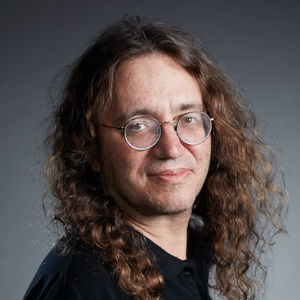
Benjamin Goertzel

Benjamin Goertzel, PhD

AGI Researcher

Founder of SingularityNET and Hyperon. Co-editor of Evidence for Psi. Author of the wu-wei geodesics framework underlying this program.
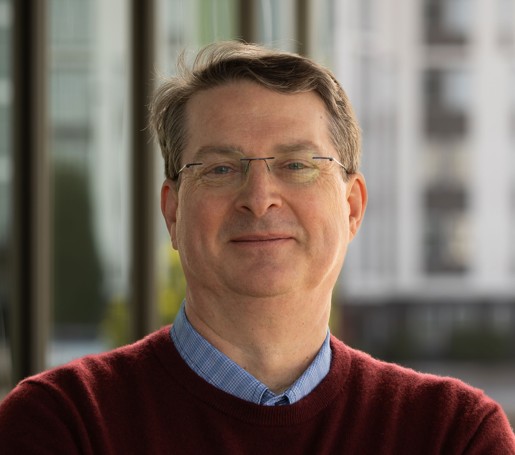
James Tagg

James Tagg

Technology & Physics

Co-founder of the Penrose Institute with Sir Roger Penrose. Pioneer of touchscreen technology. Founder of Truphone. Author of Are the Androids Dreaming Yet?
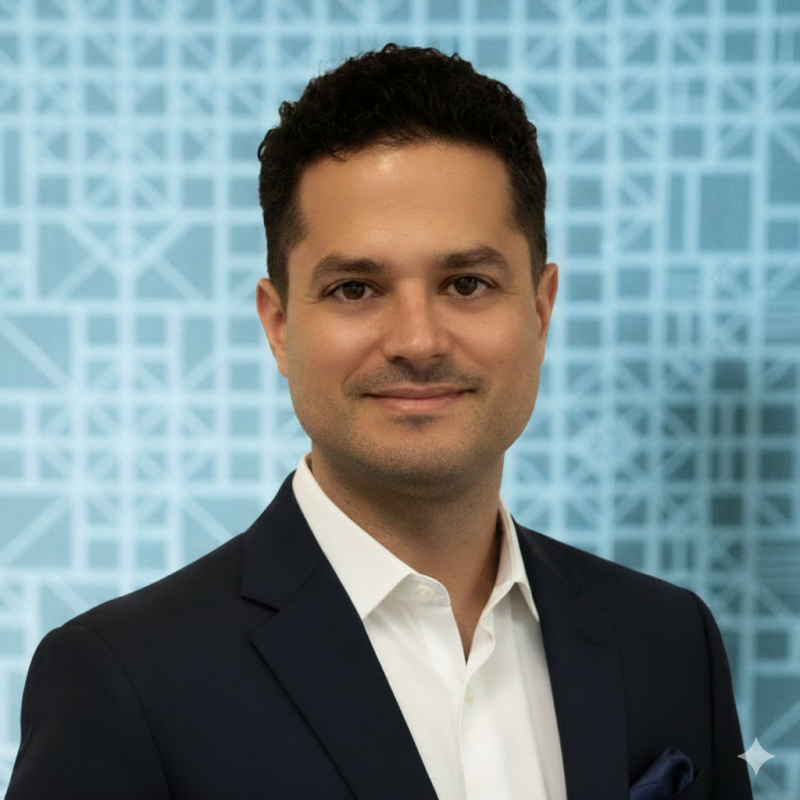
Gabriel Axel Montes

Gabriel Axel Montes, PhD

Neuroscience & AI

Consciousness, AI, and neurotech researcher. Has helped build and scale AI companies including SingularityNET. Co-author of The Consciousness Explosion with Ben Goertzel.

Supported by experimental physicists, quantum engineers, organoid specialists, and software scientists.

Partners

If the future can bias the present—even slightly—we should find out.

We're open to collaborators and partners across physics, neuroscience, AGI, and scientific philanthropy.